Every decision needs a control group
A correlation sizes an opportunity, but only a causal method may promise an effect on the P&L. That is why every decision in Signal starts with its own control group.
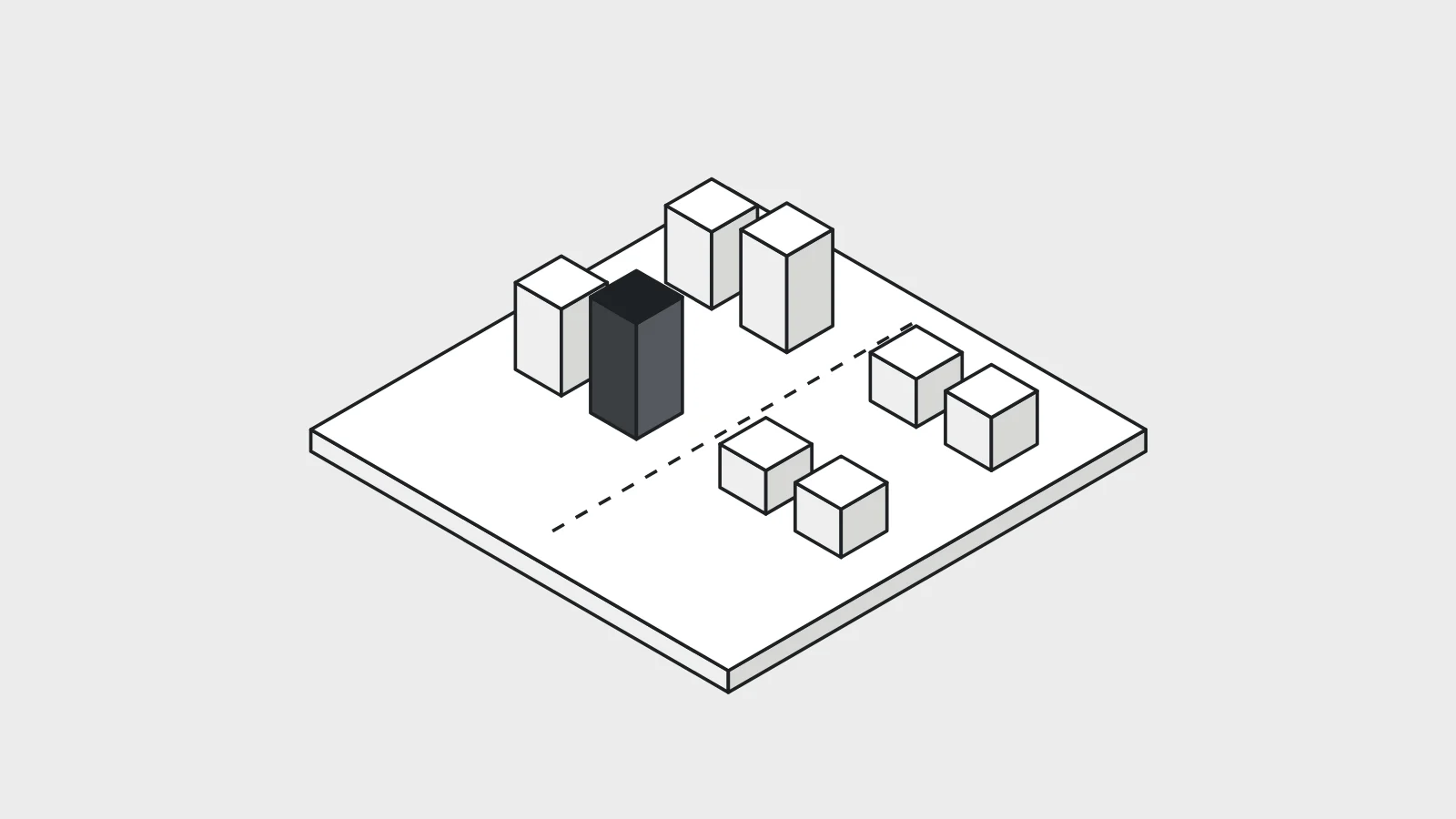
Almost every company has lived this scene: a promotion ends, sales went up, and each team shows a different number for what the campaign "generated". The problem is rarely the spreadsheet. It is that nobody agreed, before it started, what the result would be compared against.
Three kinds of claim
Not every number can say the same thing. In Signal, every method carries a label that travels with the number into every brief:
- Descriptive: sizes an opportunity. Price elasticity per SKU, for example.
- Predictive: projects a scenario. A Monte Carlo simulation, or a forecast tested against held-out history.
- Causal: measures an effect. Only this one may promise a result on the P&L.
So a correlation never shows up in a brief dressed as an effect.
A contract before the decision
Every decision is pre-registered before it starts, with:
- the metric that will be read;
- at least two treatment and two control units;
- a start, an end and a readback date;
- a guardrail metric: what must not get worse.
Because all of this is fixed up front, nobody picks the result after the fact.
The readback
On the agreed date, the effect is read by difference-in-differences: at least three periods before and two after, every observation used, a 95% interval and a parallel-trend check. When no clean control group exists, a synthetic control, a weighted combination of similar units, stands in.
If the effect was not measurable, the report says so in plain words.
A readback is reported as a measured effect pending validation. It is never booked as captured value.
What the system learns
What a readback teaches becomes a candidate rule, and it stays inactive until a person approves it. The system only learns what people agreed to teach it.
Want the method in detail? The Measurement page walks through each step.